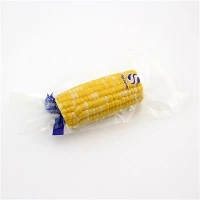
PE Heat Seal Film
Description
Technical Parameters
PE Heat Seal Film serves as the primary sealant web in multi-layer flexible packaging laminates. Engineered for thermal jaw sealing, it provides hermetic containment for dry powders, liquids, and solid goods. The film delivers structural strength and seal integrity during pouch conversion and high-speed form-fill-seal operations, resisting seal-area dust and oil contamination during automated filling. Packaging engineers select this film to secure reliable seal strength and burst resistance across standard polyethylene lamination specifications.
Key Features
Broad Thermal Sealing Window: Maintains consistent seal integrity across commercial packaging temperature ranges without thermal distortion of outer lamination webs.
Contamination-Tolerant Sealing: Flow properties under heat and pressure allow effective bonding through minor residual dust or liquid droplets in the seal area.
Corona Surface Stability: Corona-treated surface maintains a stable 38+ dyne level, ensuring strong adhesion with solvent-less and solvent-based lamination adhesives.
Web Tension Uniformity: Strict gauge control ensures consistent film unwinding tension, minimizing wrinkles and registration drift on high-speed conversion lines.
Applications
Pouch Conversion: Functions as the inner sealing layer in laminated structures (e.g., PET/PE, NY/PE) for three-side seal, stand-up, and zipper pouches.
Form-Fill-Seal (FFS) Packaging: Supplied as roll stock for vertical and horizontal FFS lines handling dry foods, powders, granules, and personal care items.
Industrial Item Bagging: Applied in heavy-duty single-layer or multi-layer bags requiring puncture resistance and high seam strength under bulk loads.
Materials & Specifications
|
Technical Parameter |
Specification Range |
Test Method / Standard |
|
Material Composition |
LDPE / LLDPE resin blends (Specific grade TDS available upon request) |
ASTM D1238 (MFI) |
|
Thickness Range |
20 µm – 120 µm (Gauge tolerance: ±5%) |
ASTM D374 |
|
Film Width |
200 mm – 1600 mm (Custom rotary slitting) |
Precision Slitting Standard |
|
Surface Treatment |
One-side corona treatment (≥ 38 dyne/cm) |
ASTM D2578 |
|
Coefficient of Friction (COF) |
Static ≤ 0.3, Dynamic ≤ 0.25 (Custom slip formulations available) |
ASTM D1894 |
|
Tensile Strength (MD/TD) |
≥ 20 MPa / ≥ 18 MPa |
ASTM D882 |
|
Roll Core & Diameter |
76 mm (3 in) or 152 mm (6 in) ID core; Max OD 800 mm |
Industrial Standard |
|
Documentation & Quality |
Certificate of Analysis (COA) provided per production batch |
Batch Traceability System |
How to Choose
To receive an exact film recommendation, specify your packaging machine type (VFFS/HFFS/pouch maker), laminate structure, pouch dimensions, and filling product (dry, liquid, or dusty powder). Sharing target line speeds, sealing temperatures, and required COF values enables our engineering team to select the optimal resin blend, thickness, and additive formulation for your trial.
FAQ
Q: How do I choose the correct film thickness for my packaging structure?
A: Required gauge depends on product weight, pouch geometry, and required burst strength. Sachets under 100 grams typically use 20–40 µm film, while large stand-up or gusseted pouches for heavy contents require 50–120 µm to ensure bottom seal stability and puncture resistance.
Q: How is food contact compliance verified for specific applications?
A: Compliance depends on the filled content type and processing temperature. Upon confirmation of your product requirements, our team provides raw material regulatory statements and migration test reports corresponding to applicable FDA or EU food contact regulations.
Q: Can the coefficient of friction (COF) be modified for high-speed automated machinery?
A: Yes. Slip and anti-block additive concentrations are controlled during extrusion. Lower COF ( dynamic ≤ 0.20) prevents film dragging over metal forming collars on vertical FFS lines, while higher friction can be specified for stable pouch stacking.
Hot Tags: pe heat seal film, China pe heat seal film manufacturers, suppliers, flexible packaging films for christmas wrap, flexible packaging films for e commerce, flexible packaging films for easter wrap, flexible packaging films for stretch wrap packaging, moisture resistant flexible packaging films, pharmaceutical flexible packaging films
Previous
CPP Heat Seal FilmNext
No InformationSend Inquiry