




Custom Printed Packaging Rollstock for Flexible Packaging
Custom gravure and flexographic printed rollstock engineered for downstream pouch making and continuous automated form-fill-seal packaging operations.


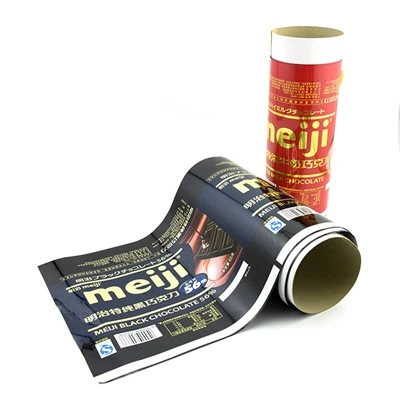

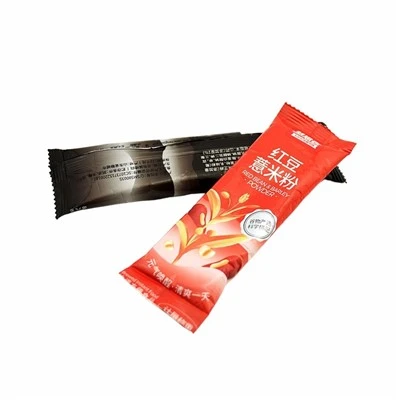
Category Overview
Printed Packaging Rollstock consists of continuous multi-layer laminated film wound onto cores, designed specifically for conversion into pre-made pouches or for direct feeding into high-speed automated packaging machinery. Unlike pre-formed pouches, rollstock provides higher packaging speed, lower unit material cost, and maximized operational efficiency for continuous filling lines. We produce customized film structures, roll widths, core sizes, and high-definition surface or reverse printing tailored to precise functional barrier requirements, optical eye-mark registration, and specific unwinding machinery configurations.
Technical Specifications
|
Technical Parameter |
Standard Range / Specification |
Testing Standard / Option |
|
Material Structure |
PET/PE, PET/AL/PE, PET/NY/PE, BOPP/CPP, Matt PET/PE |
Customized Multi-layer Laminations |
|
Printing Process |
High-Precision Gravure or Flexographic Printing |
Reverse or Surface Printing |
|
Color Capability |
Up to 10 Colors |
Pantone Matching System / CMYK |
|
Thickness Range |
40 micrometers – 180 micrometers |
Plus or minus 5 percent gauge tolerance |
|
Roll Width Range |
50 millimeters – 1200 millimeters |
Custom Slitting Tolerance plus or minus 1.0 millimeter |
|
Core Inner Diameter |
76 millimeters or 152 millimeters |
High-Strength Paper or Composite Core |
|
Max Roll Outer Diameter |
Up to 600 millimeters |
Customized per unwinder specification |
|
Coefficient of Friction |
Static: below 0.35 / Kinetic: below 0.30 |
ASTM D1894 |
|
Optical Registration |
Integrated Eye-Marks |
Pitch tolerance plus or minus 0.5 millimeter |

Substrates and Outer Layers: PET for high transparency and tensile strength, Matt PET for premium tactile finish, BOPP for high clarity and stiffness.
Barrier Layers: Aluminum Foil for complete light and gas barrier, Metalized PET for balanced cost and barrier performance, BOPA for superior puncture resistance.
Sealant Layers: LLDPE for reliable low-temperature sealing, CPP for high heat resistance, Easy-Tear PE for straight directional tearing.
Printing and Finishes: Reverse printing under outer substrate to prevent ink scuffing, surface printing, selective matte and gloss combination, full matte, and soft-touch tactile coatings.
Roll Configurations: Custom unwinding direction, precise roll core diameter, custom slit width, optical eye-marks, and micro-perforation lines.
Applications of Printed Packaging Rollstock
Automated Food Packaging:
High-barrier rollstock supplied directly to form-fill-seal equipment for snacks, coffee, dry powders, and confectionery.
01
In-House Pouch Converting:
Premium printed rollstock supplied to flexible packaging converters for downstream pouch fabrication and sealing.
02
Single-Serve Powder Sachets:
Tight-tolerance narrow slit rollstock designed for continuous sealing across multi-lane packaging machines.
03
Pet Food and Agriculture:
Puncture-resistant nylon-reinforced printed rolls constructed for heavy filling volume and dense granules.
04
Personal Care Packaging:
Chemical-resistant laminates formulated for continuous wrapping of wet wipes, lotions, and liquid samples.
05
Key Considerations
Machinery Compatibility: Unwind shaft core inner diameter, maximum outer roll diameter, unwinding orientation, and line speed dictate physical roll dimensions.
Friction and Web Handling: Controlled kinetic coefficient of friction prevents film drag over forming collars and eliminates slippage on drive rollers.
Printing Method Selection: Gravure printing provides consistent high-volume color density and micro-detail, while flexographic printing provides efficient medium-run production.
Barrier and Product Interaction: Specific fill ingredients require tailored lamination adhesives to prevent layer separation under pressure or chemical exposure.
Thermal Sealing Window: The melting point differential between the inner seal layer and outer heat-resistant substrate determines machine operating speed limits.
Our streamlined process from initial artwork submission to mass production ensures complete technical alignment:
Parameter and Machinery Identification: Share your packaging equipment type, target roll dimensions, unwind orientation, core size, and product fill details.
Artwork and Design Submission: Provide vector artwork files with clear Pantone color references, eye-mark placements, and surface finish preferences.
Specification and Proof Approval: Review technical structural recommendations, barrier performance criteria, and digital artwork proofs.
Quotation and Production: Receive formal commercial terms followed by precise cylinder or plate engraving, printing, lamination, curing, slitting, and quality inspection.

FAQ

Request Technical Specifications and Rollstock Quotation
Submit your packaging machinery specifications, material structure requirements, or artwork files to receive a comprehensive technical proposal and custom rollstock quotation.
We're professional printed packaging rollstock manufacturers and suppliers in China, specialized in providing high quality custom design service. We warmly welcome you to wholesale high-end printed packaging rollstock for sale here from our factory.