




Company Profile
The total area of the factory is 32666 square meters, with a production area of 18000 square meters. With excellent quality and good reputation, our factory has won the general praise of customers. Our main business is to manufacture flexible packaging for food and high performance environmental protection shrink film labels.
Why Choose Us
Our Factory
Qingdao Chengyue Packaging Technology Co., Ltd. was established in 2003. The factory is located at No. 18, Kongjiaohe 1st Road, Jili District, Qingdao City, Shandong Province, China, covering a total area of 22,700 square meters, with a production area of 7,400 square meters.
Our Certificates
Our company is certified with a food plastic packaging production license (QS certificate) and has obtained ISO 9001 quality management system certification.
Our Products
The company's main products include high-performance food plastic packaging composite films, high-energy barrier packaging bags, and garment bags. According to customer requirements, we can produce automatic packaging film rolls to meet the needs of clients in the United States, Japan, South Korea, and other regions.
Pre-Sales Service
Our professional team provides detailed product information and usage recommendations to help customers choose the most suitable soft packaging products for their needs. We offer telephone consultations, online customer service, email communication, and face-to-face interactions.


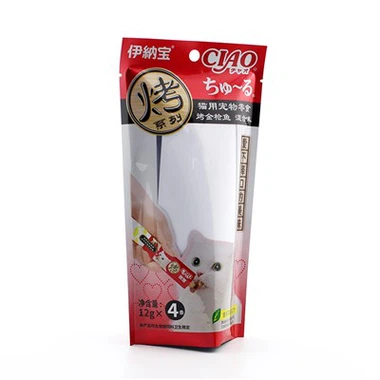


What is Flexible Packaging?
Flexible packaging is a means of packaging products using non-rigid materials, which allow for more economical and customizable options. It is a relatively new method in the packaging market and has grown popular due to its high efficiency and cost-effective nature.
Flexible packaging is any package or part of a package whose shape can readily be changed when filled or during use. Flexible packaging is produced from paper, plastic, film, aluminum foil, or any combination of those materials, and includes bags, pouches, liners, wraps, rollstock, and other flexible products.
Benefits of Flexible Packaging
Protects your products
Flexible packaging features a multi-layer construction that keeps food safe, keeps oxygen out, and keeps aroma in. Each layer works to prevent and reduce spoilage by keeping products together, ensuring fresh food for you to enjoy. Flexible packaging is resistant to denting and breakage, so it protects products throughout the shipping process!
Reduces food waste
Flexible packaging simultaneously protects and extends the shelf life of products without the use of preservatives. As shelf life increases, food waste decreases. This is a key benefit, as food waste is a major challenge in the United States, where approximately 1.3 billion tons of food is thrown away annually. Visit this link to see how dramatic the impact is for a number of everyday foods stored in flexible packaging!
Convenience is KING
Flexible packaging can go places that other packaging cannot. It is easy to open, carry, reseal, and store! You can easily throw it in your bag and take it with you on the go. Since it is lightweight and easy to store, it also saves space in your kitchen and throughout other areas of your home.
Reusable
Along with reducing food waste and being environmentally friendly, flexible packaging is also reusable! According to the U.S. EPA Waste Hierarchy, the most preferred method for waste management is using fewer resources to produce and reusing the packaging. There are many ways to reuse flexible packaging. Get started today by checking out our blog post for 16 ways to reuse flexible packaging.
Types of Flexible Packaging
Pouches:
Pouches are the most recognizable form of flexible packaging. A pouch is made of thin plastic, metal and/or paper material. They work well for a variety of different, including liquids, creams, tablets, gel-caps and granular powders. Pouches are common in food and beverage and pharmaceutical packaging due to their security and protection qualities. Since they require little material and are lightweight, pouches make distribution and transportation easy on the manufacturer, shipper and consumer.
Sachets:
Sachets are similar to pouches. In fact, they’re sometimes referred to as “small pouches.” Sachets differ from pouches in that their contents are sealed (welded) on all four sides, typically containing a one-time-use product, such as an alcohol wipe. Sachets often come in the form of laminated paper or an aluminum or PET film.
Wrappers:
Wrapping a product (for example the plastic film around a water bottle) is another example of flexible packaging. Wrappers are commonly used to brand products, providing visibility and identity to consumers. Twist wrappers are another form of flexible packaging that is often made from cellophane and used for products that don’t require significant protection characteristics. Twist wrappers are often seen on products like candy and confectionery products.
Plastics
Plastic films are the bread and butter of the flexible packaging industry due to how well they balance strength, cost, and weight. They also make up the largest category by far due to how many iterations of different polymers exist in the market. While plastic is often used as a catch-all term for the layman, a flexible packaging converter should understand what makes each plastic different from the next in order to create an effective, cost-sensitive package.
Polypropylene (PP, OPP, BOPP, CPP)
A cost-effective film with a high melting point, polypropylene (PP) can be found in many iterations and is a staple in the flexible packaging space. It is often oriented in one or both directions in order to increase its durability, clarity, and effectiveness as a barrier layer, with biaxially oriented polypropylene (BOPP) being in especially high demand. When used as a barrier, PP effectively reduces a package’s water vapor transmission rate and keeps moisture from affecting products, such as ensuring powders do not clump together inside the package.
Polyester (PET, OPET, BOPET)
Durable but affordable, polyester is highly versatile and can be used in a broad range of packaging formats and contexts. Like PP, Polyester (PET) can be oriented to enhance its properties, but these versions are seen less frequently than standard PET. It is very popular in food packaging applications, where it provides superior strength, rigidity, and heat tolerance for stand-up pouches, sachets, and three-sided sealed bags.


Nylon
Nylon is valued for its ability to stretch and adapt to environmental changes while still providing impressive durability. Because nylon is hygroscopic, which means it allows moisture and humidity to pass through freely, it should never be used as a moisture barrier layer.
Polyethylene (PE, LDPE, HDPE)
Although polyethylene (PE) is notoriously weak compared to other plastic films, it is highly elastic and can be combined with other materials to enhance its durability and benefit from their characteristics. Low-density polyethylene (LDPE) is commonly used to create products such as produce bags, plastic wraps, and plastic containers, while high-density polyethylene (HDPE) is durable enough to become milk jugs and plastic bottles.
Ethylene-Vinyl Alcohol (EVOH)
This clear, flexible material can be a copolymer or a coating and features excellent resistance to cracking. It is used almost exclusively as a barrier layer that prevents oxygen and other gases from entering or leaving a package. Because many edible products can react negatively or even spoil when exposed to oxygen, EVOH is very common in food packaging.
Application of Flexible Packaging In Food Packaging
Food packaging is the main object of the use of composite flexible packaging material. It has different requirements in great diversity. The contents are packaged from raw to cooked, from low temperature to high temperature, from high moisture content to dried food, from vacuum packaging to inflatable packaging, almost covering all applications of composite flexible packaging materials.
(1) Modified atmosphere packaging: By replacing the gas in the packaging, the food can achieve the purpose of quality preservation in the changed gas environment; It is a kind of sealed packaging that changes the gas environment, and uses a certain gas to achieve the purpose of quality preservation.
(2) Vacuum packaging: It is a packaging method that put the food into the air-tight packaging container or bag, and then the air in the bag is excluded, causing a certain vacuum, finally sealed sealing.
(3) Moisture-proof packaging: The use of moisture-proof materials with the ability to isolate water vapor to seal the product to isolate the influence of external humidity changes on the product, and make the relative humidity in the package to meet the requirements of the product, to protect the quality of the article.
(4) Sterilization packaging: For non-sterile packaging, chemical methods are generally not used. The main methods are pasteurization, hot packing sterilization, cooking sterilization, ultraviolet sterilization, microwave sterilization, radiation sterilization, ultra-low temperature sterilization.
(5) Light-resistant packaging: There are the following various structures: paper base, aluminum foil, aluminized film, colored film, full-plate printing film, the composite film composed of these opaque materials is the structure and composition of light-resistant packaging.
(6) Refrigerated and frozen packaging: It can reduce the moisture activity of food, thereby extending the freshness of food. It is an important means to keep food highly fresh.
(7) Aseptic packaging: A modern packaging technology in which pre-sterilized sterile food is packed into sterilized packaging material and sealed under aseptic conditions.
How Flexible Packaging Is Made?
Plate Making
The plate making process is the process of manufacturing a printing plate that transfers ink to the printing material during printing. Through the dots made on the printing plate, the color of the original image is reproduced.
Printing
The printing process is the process of using substrates, printing plates, inks, and printing machinery to achieve graphic reproduction. The graphics and text on the printing plate will be transferred to the substrate.
Most flexible packaging is produced by gravure printing process. During production, the printing material is discharged into the printing device through the unwinding device, the ink on the surface of the printing plate is scraped off by the scraper, and the ink in the dots is transferred to the printing material when the printing material is pressed down.
Quality Inspection
The quality inspection process is a process in which the printed semi-finished products are checked out and rejected by the quality inspection machine. Reduce the production loss in the subsequent process and the difficulty of quality inspection.
Compounding
The compounding process is to combine two or more materials together to form an integrated material. Composite materials can not only maintain the excellent characteristics of single-layer materials, but also overcome their respective shortcomings. After composite, they have new characteristics and meet the different requirements of food and other commodities for composite materials.
Most of the flexible packaging is produced by the dry compounding process. During production, the glued substrate is discharged into the gluing device through the unwinding device. The glue on the surface of the glue roller is scraped off by the scraper, and the glue in the dots is on the glued substrate. When the pressing occurs, it is transferred to the surface of the glued substrate, and then enters the oven. The solvent component in the glue is volatilized in the heated and blown oven. After coming out of the oven, it is integrated with the substrate released by another unwinding device in the heated and pressurized composite nip roller. After cooling and shaping, it is wound into a roll-like composite film by a winding device.
Curing Process
The curing process is a process in which the main agent and curing agent in the composite film complete the reaction. The newly compounded composite product cannot enter the next process because the adhesive layer is not cured and set. Therefore, the main agent and curing agent must be cured through the curing process to complete the reaction of the main agent and the curing agent, and the adhesive layer is set. The maturation is divided into room temperature maturation and heating maturation. Normal temperature curing means that the composite film completes the reaction between the main agent and the curing agent at room temperature; heating curing is the composite film completing the reaction between the main agent and the curing agent at a specific temperature. Heating and curing can speed up the reaction between the main agent and the curing agent and shorten the production cycle.
Slitting
Slitting is the process of slitting the laminated composite film or the printed film that does not need to be composited into the required width. During production, the slitting material is discharged through the unwinding device, and the photoelectric control system controls the longitudinal travel position of the slitting material to keep the cutting knife position of the slitting product constant.
Bag Making
The bag-making process is a process of heat-sealing the composite film into a bag shape according to customers’ requirements. The inner layer of the composite film must be a film with heat-sealing properties.
The flexible packaging bag making process is divided into two types: back-seal bag-making and side-seal bag-making. The back-seal bag-making method is a split type, and the bag is formed by pressing the palms together and then cutting the bag to complete the bag-making.
Decoration for Flexible Packaging
Like any other packaging, decoration plays a crucial role in marketing and branding by conveying important details and enhancing the visual appeal of products. Flexible packaging such as pouches and bags often offer a larger surface area for design, perfect for delivering branding and additional consumer messaging. The following are some of the most common decoration methods used on flexible packaging.
Labels
Labels are adhesive materials applied directly to the product's surface or packaging. Labels can range in a spectrum of styles and designs. From basic black thermal printed labels for economical labeling to complex textures, patterns, and effects are all possible with labels.
Direct Printing
For a completely branded package, directly printing on flexible packaging optimizes every inch of the package. There are multiple printing options available depending on the flexible packaging material. Common printing methods include flexography, digital printing, rotogravure, and lithography.
Factory Introduction


Qingdao Chengyue Packaging Technology Co., Ltd. was established in 2003. The factory is located at No.18, Kongjiaohe 1st Road, Jili District, Qingdao City, Shandong Province, China, covering a total area of 22,700 square meters, with a production area of 7,400 square meters. With excellent quality and good reputation, our factory has won the general praise of customers. Our main business is to manufacture flexible packaging for food and high performance environmental protection shrink film labels.
FAQ
We're professional flexible packaging manufacturers and suppliers in China, specialized in providing high quality custom design service. We warmly welcome you to wholesale high-end flexible packaging for sale here from our factory.
Flat Bottom Clear Bags, Dry Food Packaging, Pocket Zipper Pouch